
One of the first questions for beginner asks is, “Am I holding my crochet hook the right way?” If you have asked yourself this same question, you’re not alone. Almost every people has wondered this at some point.
When I first started crocheting, I used spent time adjusting the hook than actually making stitches. Sometimes my hand became tired after just a few minutes or other times my stitches were either too tight or too loose. I thought I was doing something wrong and making mistake. Later, I learned that there is not “perfect” way to hold a crochet hook. The best method is the one that feels like comfortable and gives you good control.
In this guide, you will learn two most common ways to hold a crochet hook, how to hold yarn, mistakes beginners often make, and a few simple tips to make crocheting more comfortable.
Does It Matter How to Hold a Crochet Hook?
Yes, it does but not in the way most beginners think.
The goal is not to copy someone else’s hand position exactly. Instead, you want to hold the hook in a way that keeps your hands relaxed, feels natural, and allows the hook to move smoothly through the stitches.
If your grip is too tight, your hands may become tired, and your stitches can end up uneven. A relaxed grip gives you better control and makes crocheting much more fun.
As you practice, you will naturally develop your own style that works best for you.
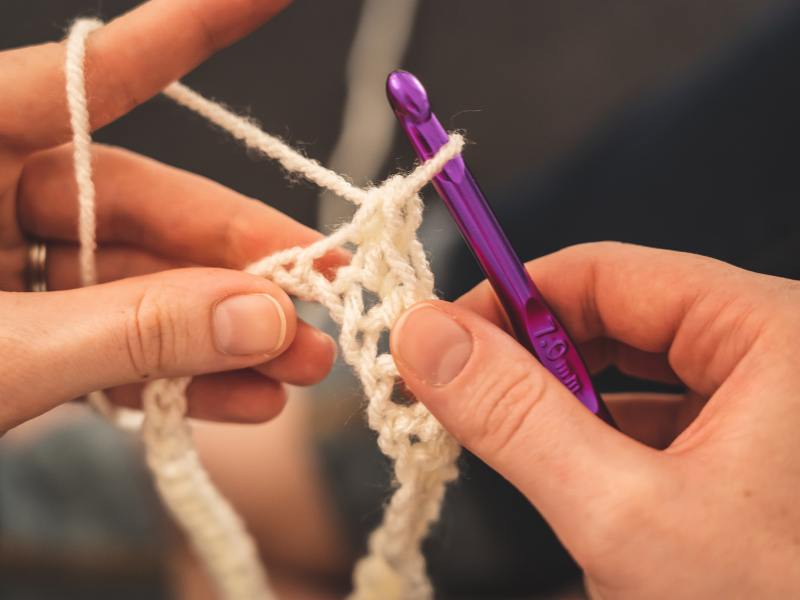
The Most Common Ways to Hold a Crochet Hook
There are two popular methods used by people around the world. Either one is better than the other. It is simply a matter of way and comfort.
1. The Pencil Grip
As per name suggests, you hold the crochet hook the same way you would hold a pencil while writing.
Place your thumb and index finger on the flat part of the hook, and let the handle gently against your middle finger. This grip gives you good control over small movements and making it popular for delicate crochet work.
Many beginners like the pencil grip because it feels familiar and natural because we this daily life while writing
This is best for:
- Small projects
- Fine and thin yarn
- Detailed stitch
- Beginners who already write comfortably with a pencil grip more useful
2. The Knife Grip
The knife grip is another very popular method to hold crochet hook.
Hold the hook as like you are holding a dinner knife. Your thumb rests on the flat section of the hook while your fingers wrap gently around the handle and hold tight.
Many experienced people prefer this grip because it feels comfortable during longer crochet sessions and can reduce hand fatigue.
This is best for:
- Blankets and coaster
- Sweaters and sleeves
- Tote Bags
- Larger projects
- Long sessions for crochet
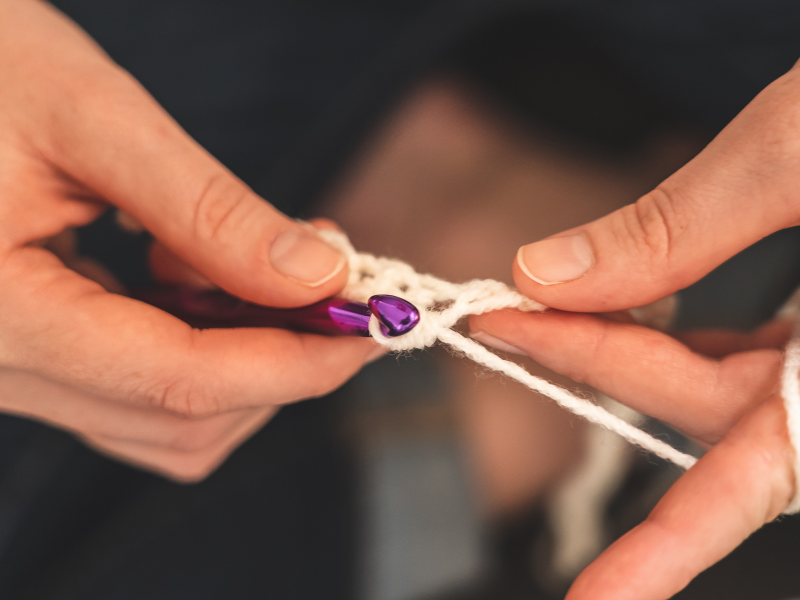
Which Grip Is Better?
The honest answer would be whichever makes you feel comfortable.
Some people even switch between the pencil grip and the knife grip depending on the project they’re working on.
Instead of worrying about choosing the “correct” method, spend time trying both grips. After a little practice, one will probably become to feel more natural than the other.
Comfort is always more important than copying someone else’s technique of work
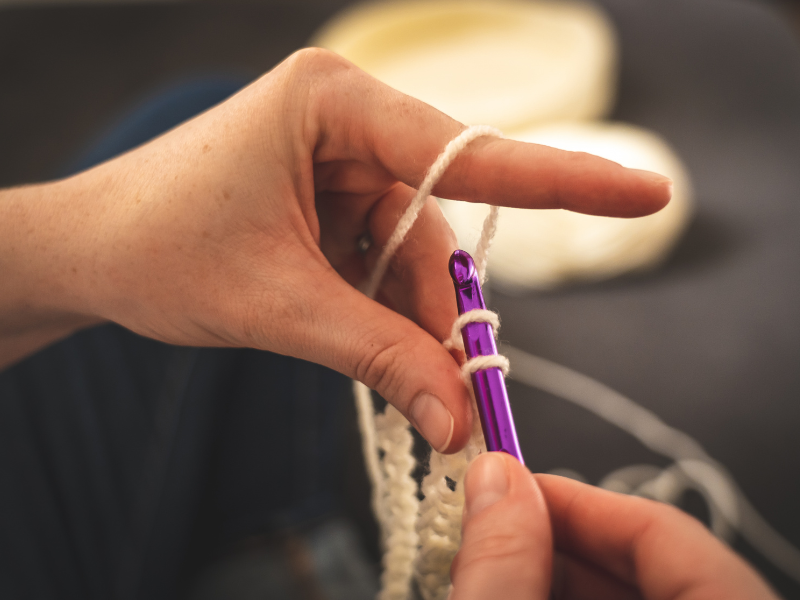
How to Hold the Yarn?
Holding the hook is half of the process. The way you hold your yarn directly affects your stitches.
The aim of holding the yarn is to control its tension. If the yarn moves freely, your stitches may become loose. If you pull it tightly, inserting the hook into your stitches will become difficult.
A very simple way to hold the yarn is to let it pass over your index finger while the remaining fingers gently guide the yarn. There is not a single correct method, so don’t have to worry about, experiment until you find a position that feels comfortable.
At first, your hands may feel awkward because they are learning a completely new movement but eventually it becomes used to. That is perfectly normal, and it makes easier with practice.
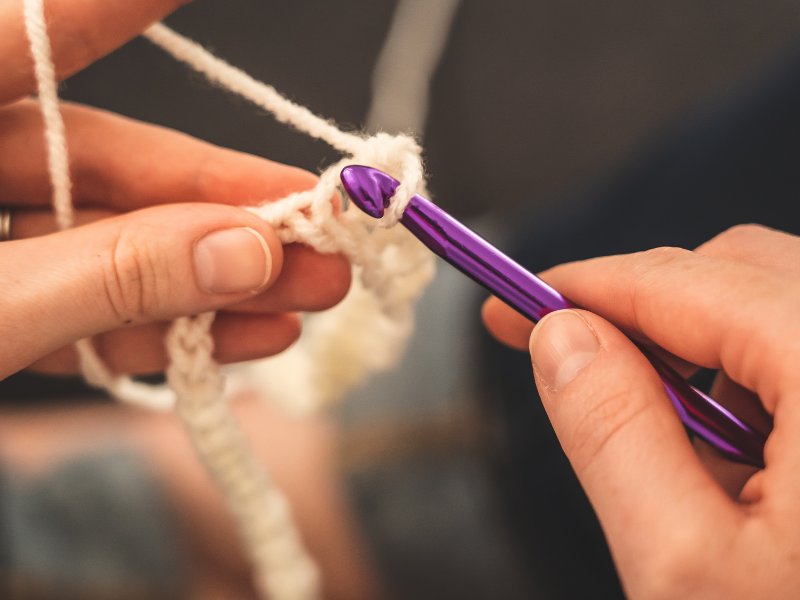
Understanding of Yarn
One of the biggest challenges for beginners is not learning the stitches but it is maintaining even yarn tension.
Yarn tension simply means how tightly and loosely you hold the yarn while crocheting.
If your yarn tension is too tight:
- Stitches become difficult to work.
- Your project may start curl.
- Your hands can become tired very quickly.
If your yarn tension is too loose:
- Stitches will look uneven.
- The finished project may lose its original shape.
- Gaps between stitches can become more visible able.
Try to keep your hands more relaxed and let the yarn flow naturally. Even tension develops over time so that do not expect it to be perfect right away.
How to Sit Comfortably While doing Crochet
Many beginners focus only on their hands and forget about posture.
Good posture makes a big difference and especially during longer crochet sessions.
Here are some simple tips:
- Sit comfortably in chair with back support.
- Keep your shoulders more relaxed.
- Rest your elbows closely to your body.
- Avoid bending your neck too forward.
- Take short breaks every 20 to 30 minutes, it is very important.
Crochet should feel relaxing and enjoyable not painful.
Common Mistakes that Beginners Make
Learning how to hold a crochet hook takes practice and Here are a few common mistakes to avoid.
Holding the crochet Hook Too Tightly
Many beginners grip the hook as tightly as possible because they are worried about dropping it, which is very common.
A tight grip often causes stiff movements and sore hands.
Pulling the crochet Yarn Too Hard
Tight yarn tension makes stitches difficult to work into and can slow your progress of your crochet projects.
Constantly making Change in Your Grip
It is normal to adjust your grip while learning, however changing it after every few stitches can make it harder to build muscle memory.
Choose one method and practice with it for a few days before deciding whether you would like to switch and make work.
Comparing Yourself to Others people
If your favorite crochet creator holds the hook differently which is okay.
Every person develops their own style over time. Focus on what makes you feel comfortable for rather than trying to copy someone else’s hand position exactly.
Tips for Better Control in hand
Here are a few basic habits that can improve your crochet experience:
- Practice with between 3 mm or 5 mm crochet hook.
- Use light-colored yarn so it is easy to see.
- Relax your shoulders while making crochet projects.
- Keep your movements slow but steady.
- Practice for a short time each day instead of long sessions once a week.
You will be surprised when you will know how quickly your hands become more comfortable.
Frequently Asked Questions
What is the correct way to hold a crochet hook?
There isn’t one correct method. Most crocheters use either the pencil grip or the knife grip. The best choice is the one that feels comfortable and gives you good control.
Which grip is easier for beginners?
Many beginners find the pencil grip familiar because it’s similar to holding a pencil. Others prefer the knife grip because it feels more relaxed. Try both and choose the one that works best for you.
Why do my hands hurt while crocheting?
Hand discomfort is often caused by gripping the hook too tightly or crocheting for long periods without taking breaks. Relax your grip and stretch your hands regularly.
How can I improve my yarn tension?
Practice is the key. Focus on keeping your hands relaxed and avoid pulling the yarn too tightly. Your tension will naturally become more even as you gain experience.