If you want to start learning crochet, you have probably noticed that almost every tutorial mentions stitches like single crochet, half double crochet, double crochet, magic ring, or slip stitch. At first, theses stitches may sound a little confusing but it is easy to learn. All you need is knowledge, practice, patience and willingness to learn.
Many crochet projects are base on using just a handful of basic stitches. Once you understand these stitches and practice them a regularly, it will help you to gain confidence to create flowers, tote bags, keychains, blankets, coasters, scarves, and many other handmade crochets.
When I first started learning crochet, I spent hours trying to memorize every stitch I saw online. But Looking back, I realized that was not essential. If I had just focused on the basics first, it would make learning much easier. That is why this guide is designed for you to help.
Let’s take look at the crochet stitches every beginner should learn.
1. Slip Knot: The Starting Point of Every Crochet Project
Although the slip knot technically not considered a crochet stitch, it is the very first step for almost every crochet project. Think of it as the starting point that holds your entire crochet project on the hook. Without that, you cannot begin making chains.
To make a slip knot you have make:
- Create a loop with hook.
- Pull another loop through it.
- Tight it gently around crochet hook.
The loop should slide easily on the hook and If it is too tight, you will make mistake to your first chain. If it is too loose, your stitches might become uneven.
Do not worry if your first slip knots are imperfect. After practice, you will be able to make one in just within few seconds.
2. Foundation Chain/Chain Stitch
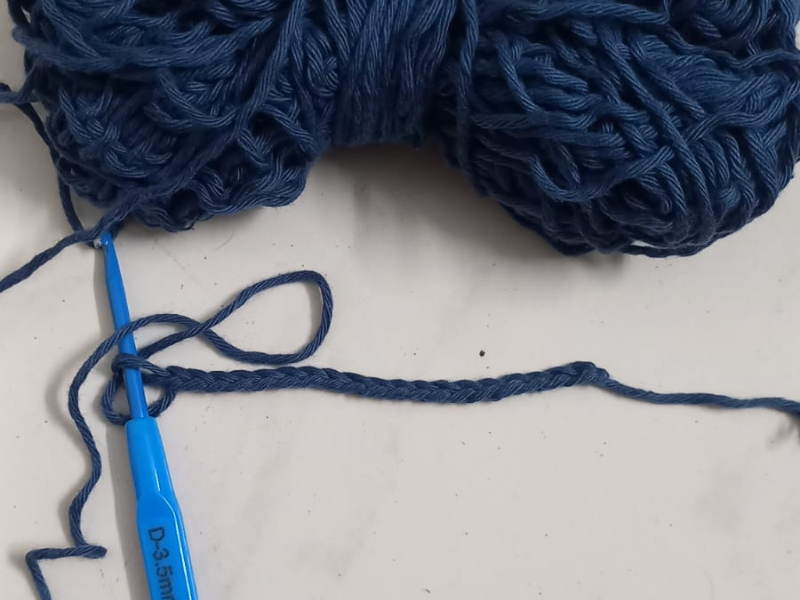
Once you have learned your slip knot, now it is time to learn the foundation chain, often written as Chain (ch) in crochet patterns.
The foundation chain forms just like it name suggest base of your entire project. Almost Every row of stitches will be worked into this chain. So it is worth taking your time to make it neat and even, because it is very important to know.
To make a foundation chain:
- Hold your crochet
- Wrap the yarn around the hook.
- Pull the yarn through the loop which is already on the hook.
- Repeat until you have reached preference number of chains.
One mistake many beginner learns make is pulling the yarn too tightly. Tight chains can make it difficult to insert your hook into next row. Try to keep your chains relaxed and evenly sized, too loose chain will not work either.
3. Slip Stitch (Sl St)
The Slip Stitch (Sl St) is one of the first and simple crochet stitches, but it is surprisingly very useful.
Unlike other stitches, the slip stitch does not add tallness to your work. Instead, it is mainly used to join pieces together and move your hook to a different position without creating extra bulk.
Mostly use of slip stitches:
- Joining rounds to projects
- Finishing and joining granny squares
- Hats Closing
- neat edges
- Connecting motifs crochet
Even though it is simple yet essay to learn the slip stitch early will make many crochet patterns easier to understand.
4. Single Crochet (SC)
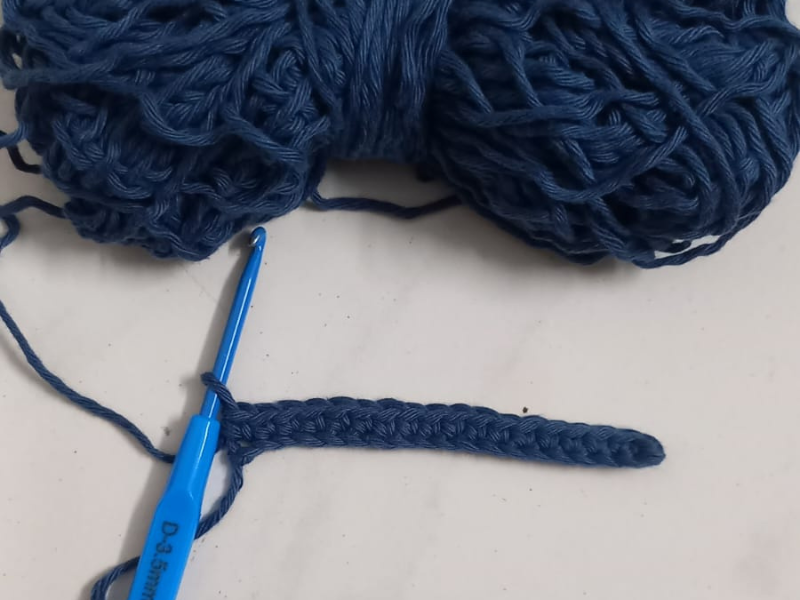
The Single Crochet (SC) is one of the most important stitches every beginner should have knowledge.
If someone asked me which stitches should we practice first, this would be my answer.
Single crochet creates a strong fabric that holds its shape well. Hence it is commonly used for projects like this:
- Tote bags to carry
- Rose coasters
- Flower Keychains
- Soft toys
- Storage baskets and sweaters
- Pouches and purses
To make a single crochet stitch:
- Insert your hook into chain
- Take yarn over the hook
- Pull up a loop (there are two loops on hook)
- yarn over the hook again.
- Pull through both loops.
Because you are learning for the first time It may feel slow, but after a few practice rows, the movement becomes much more natural.
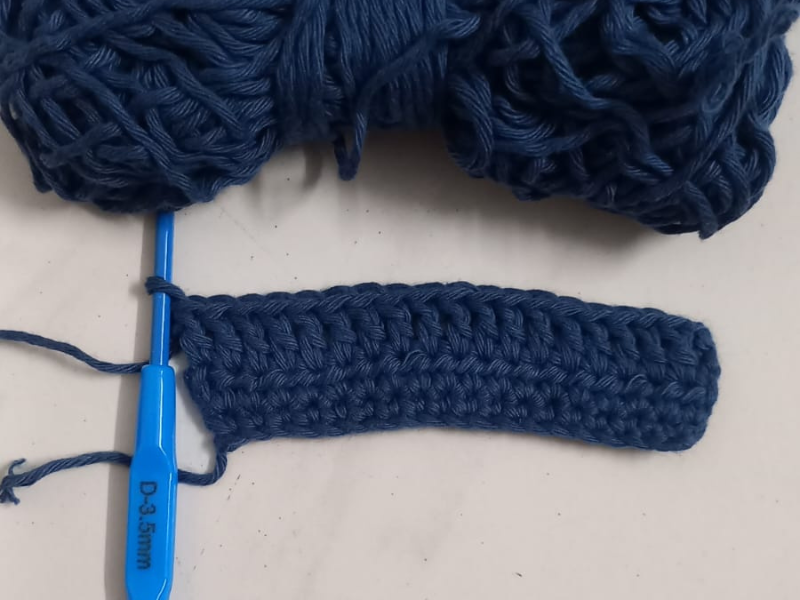
5. Half Double Crochet (HDC)
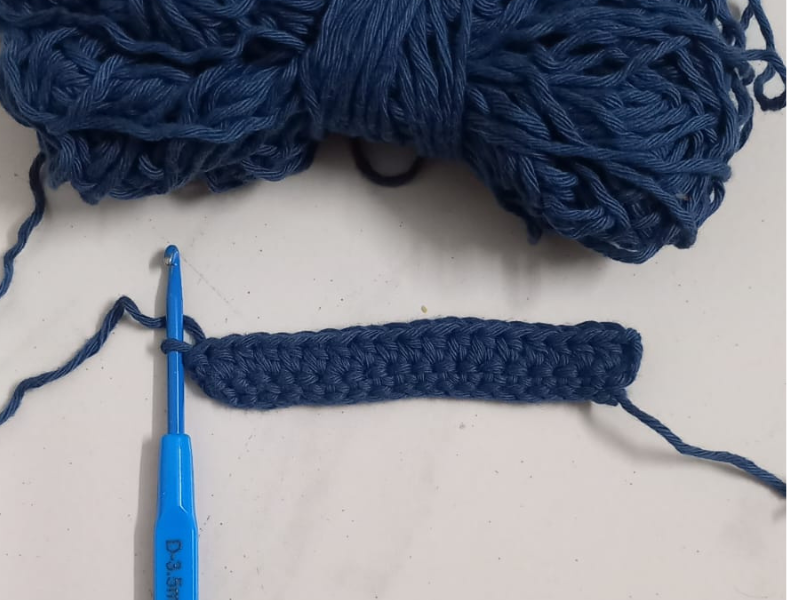
The Half Double Crochet (HDC) mix between a single crochet and a double crochet.
It’s slightly taller than a single crochet but still creates a firm fabric with very little space between stitches and also very useful
Half Double Crochet often used for:
- Beanies and hat
- Sweaters and hand gloves
- Handbags and purse
- Baby blanket and clothes
- Cushion covers and sleeves
Many people love this stitch because projects grow faster while still looking neat and structured.
If you’re making something that needs to be soft and not too loose, half double crochet is an excellent choice.
6. Double Crochet (DC)
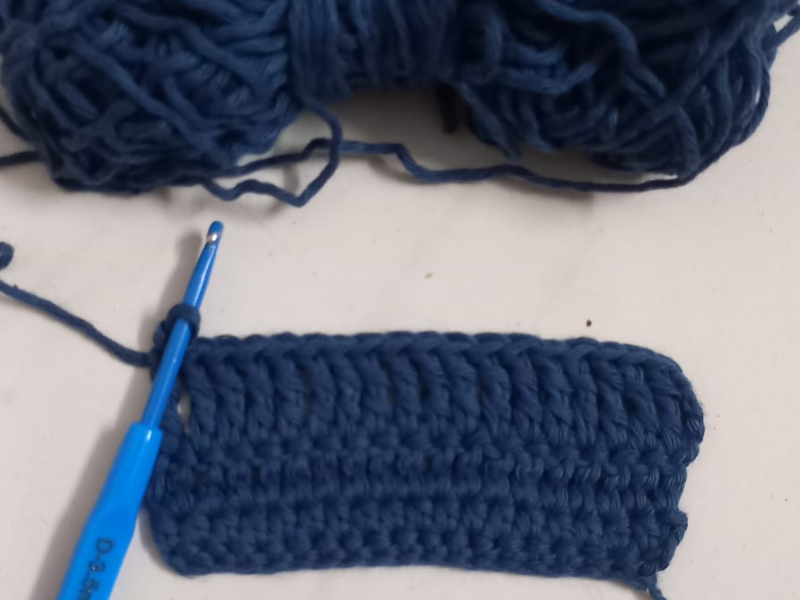
The Double Crochet (DC) is one of the most versatile and useful stitches in crochet.
Unlike single crochet, double crochet creates taller stitches and allowing projects to grow much more quickly. Mainly use for make flower pattern.
It is commonly used for:
- Granny squares and lace
- Daisy flower
- Blankets and coaster
- Cardigans
- Summer tops and sleeves
- Decorative items
Because the stitches are taller, the finished fabric feels lighter but has a little more drape.
Many beginners learning double crochet because they can see their project getting bigger after just a few rows.
7. Triple Crochet (TR)
Once you are comfortable with the previous stitches, you can move on to Triple crochet(TR).
This stitch is taller than double crochet and creates a more open and usually use for to make crochet flowers.
Treble crochet is mostly used for:
- Lace pattern
- Decorative shawls and blanket
- Lightweight scarves and sleeves
- Table runners and coaster
- Borders
Although beginners do not need this stitch immediately, it is a useful one to learn as your confidence grows.
Which Stitches Should You Learn First?
If you’re feeling lost and do not know where to start. You don’t have to learn every stitch in one day.
Start with these three stitches
- Slip Knot to start
- Foundation Chain for start chain
- Magic ring
- Single Crochet to begin crochet project
These stitches are enough to make simple projects like:
- Coasters flowers
- Crochet tops
- Crochet Bookmarks
- Mini hearts and flowers
- Small bags and pouch
As your confidence grows, you can add half double crochet, double crochet and triple crochet to your skill set.
Tips for Crochet Stitches
Learning new stitches may take time, which is completely normal.
Here are a few tips that helped you to starting out:
- Practice for 20 to 30 minutes daily instead of several hours in day because you will become frustrated.
- Count your stitches at each row.
- Use light-colored yarn so that you can clearly see your stitches.
- Avoid pulling the yarn too tightly and keep your hands relaxed.
- If your first practice piece looks uneven, don’t worry. Everyone starts like that.
The more you practice, the more natural you will become.
Frequently Asked Questions
What is the easiest crochet stitch for beginners?
The Single Crochet (SC) is considered the easiest stitch to learn after making a foundation chain. It’s simple, strong, and used in many beginner projects.
Which crochet stitch should I learn first?
Start with the Slip Knot, Foundation Chain, and Single Crochet. These three form the foundation of most crochet projects.
How long does it take to learn basic crochet stitches?
With regular practice, most beginners can learn the basic stitches within a few days. Becoming comfortable with them usually takes a few weeks of consistent practice.
Can I make projects using only single crochet?
Yes! Many beginner-friendly projects, including tote bags, keychains, coasters, baskets, and plush toys, are made almost entirely with single crochet.